To Tell or Not to Tell: Owning Your Story Before the First Date
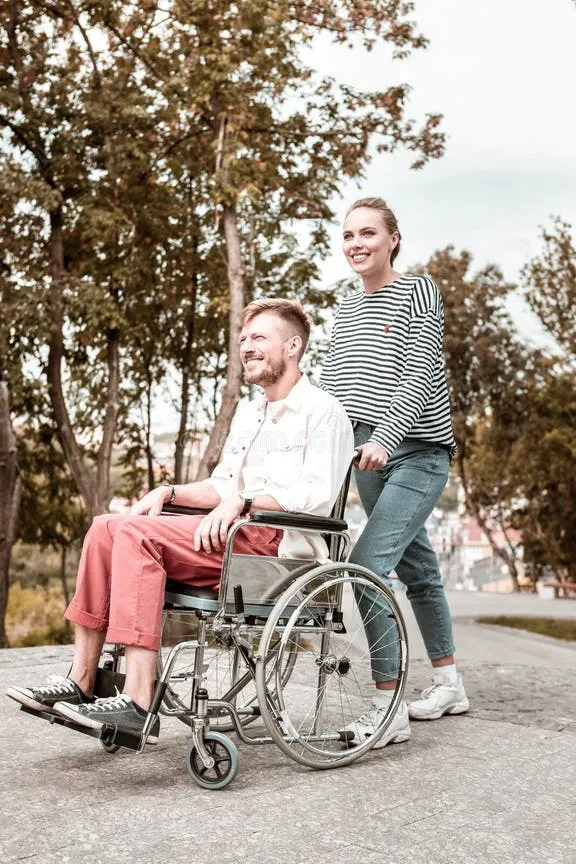
Photo: confident disabled woman smiling first date cafe wheelchair, via thumbs.dreamstime.com
Every disabled single I know has agonised over the same question: when do I mention it? In the profile? On the first message? Halfway through a decent flat white in a Manchester café? There's no universally correct answer, and anyone who tells you otherwise hasn't lived it.
But there are better and worse ways to think about it. So let's talk about them.
Your Profile, Your Terms
Some people put their disability front and centre in their bio. Others keep it private until they know someone. Both approaches are completely valid, and neither makes you 'honest' or 'dishonest'.
That said, there's a practical argument for some level of upfront disclosure. Priya, 34, from Birmingham, who has a hearing impairment, puts it plainly: 'I mention my cochlear implant in my profile because I'd rather filter out the people who can't cope with it before I've invested an evening in them.'
Meanwhile, James, 41, from Leeds, who has cerebral palsy, waits: 'My disability doesn't define my day-to-day. If someone's going to make assumptions, I'd rather they got to know me first.'
Neither approach is wrong. What matters is that you made the choice — not pressure from a dating app, a well-meaning mate, or some algorithm.
The Conversation Itself
When the moment comes, a few things genuinely help:
Keep it matter-of-fact. You're not delivering a medical lecture or asking for sympathy. 'Just so you know, I use a wheelchair — anywhere with step-free access works best for me' is a complete sentence.
Frame it as useful information, not a confession. You're helping them help you. That's it.
Don't over-explain. You don't owe anyone your diagnosis history, prognosis, or a full breakdown of your symptoms on date one. Share what feels relevant and comfortable.
Have a graceful exit ready. If the reaction is patronising, pitying, or just plain weird, you're allowed to wrap things up. 'I think we're looking for different things' works wonders.
Handling the Awkward Bits
Even well-meaning people fumble. You might get the dreaded 'so what happened to you?', the overly solicitous 'are you sure you'll be okay getting there?', or the person who suddenly treats you like glass.
A few responses worth keeping in your back pocket:
- 'What happened to you?' → 'Oh, I was just born this way. Anyway, how was your week?' Redirect and move on.
- Excessive concern → 'I've been managing this for years — I've got it covered, thanks.'
- The person who goes quiet → Sometimes it's discomfort, sometimes it's them processing. Give it a beat before assuming the worst.
And if someone genuinely can't see past your disability? That's painful, but it's also information. Better to learn it on date one than date twelve.
A Word on Safety
Disclosing a disability can, unfortunately, make some people vulnerable. Meet in public places first, tell a friend where you're going, and trust your gut. If someone fixates on your disability in a way that feels off — fetishising it, or using it to exert control — that's a red flag, not a quirk.
The Bottom Line
There's no deadline for disclosure, and no shame in choosing privacy. What there is — increasingly, in the UK's disability dating community — is a growing sense that we get to decide how our stories are told.
So tell them early, tell them late, tell them over a pint in a properly accessible pub. Just make sure it's on your terms.