Junction 14 of the Heart: Making Long-Distance Love Work When Transport Is the Real Third Wheel
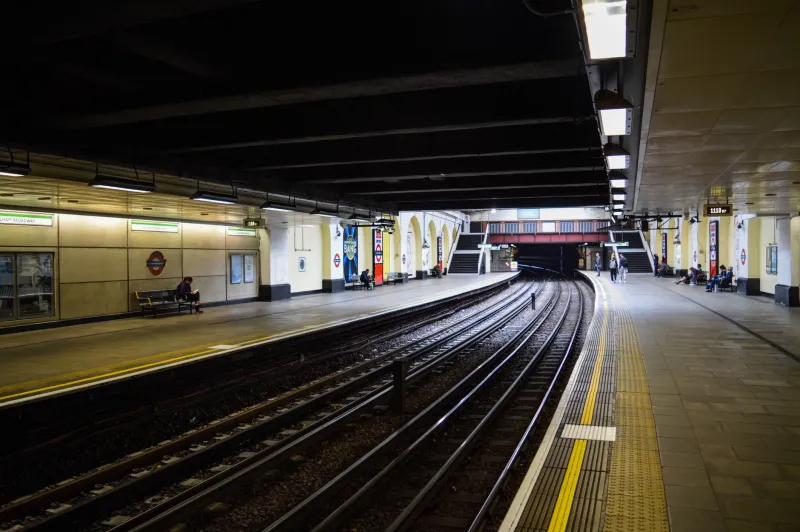
There's a particular kind of hope that blooms when you match with someone wonderful who lives 40 minutes away. Forty minutes! That's nothing. That's one episode of a podcast. Except, of course, it isn't — because for many disabled daters, '40 minutes' is a fiction written by people with cars, step-free stations and bodies that don't bill them for every journey.
By the time you've factored in the taxi that isn't wheelchair accessible, the one train per hour with a ramp you have to request 24 hours in advance, and the fatigue that arrives like an uninvited chaperone, that 40-minute journey is a half-day expedition. Suddenly, your lovely match in the next town may as well be in the Outer Hebrides.
So is it worth it? Let's talk honestly about that.
The Tyranny of the Accessible Route
Non-disabled friends talk about distance in miles. Disabled daters talk about it in interchanges. 'It's only two junctions away' means nothing if junction 15's station has no lift and the replacement bus service has a step and a driver who sighs.
Before you write anyone off — or commit wholeheartedly — do the maths properly. Not the Google Maps maths. The real maths: door to door, both directions, on a bad pain day, in the rain. If the journey takes two hours each way and leaves you wrecked for the following day, that's not a 40-minute commute. That's a three-day commitment disguised as a coffee date.
Meeting in the Middle (Literally)
One of the loveliest things about dating at a distance with access needs is that it forces creativity. Instead of defaulting to 'your place or mine', you end up negotiating genuinely good meeting points: a step-free café roughly halfway between you, a level stately home garden with a decent tea room, that one Premier Inn on the A-road that both of you know has an accessible room and a reliably average breakfast.
There's something rather romantic about a neutral halfway town, actually. It's yours. Not their patch, not yours — a little liminal zone where the relationship lives. Some long-married couples still have fond feelings for the Travelodge off junction 11 where it all began.
Overnight Stays: The Equipment Tetris
Here's the bit nobody warns you about. Staying over at a new partner's house isn't just 'forgot my toothbrush' territory. It's: can I get through the front door? Is there a downstairs loo or will this be a problem? Will my hoist, my CPAP machine, my medication that needs refrigerating, my shower chair — will any of this work in a 1930s semi belonging to someone whose spare room is also a home office?
The advice from couples who've cracked this: talk about it early, and without apology. A partner who bristles at 'I need to know if your bathroom door is wide enough' before the second visit is telling you something useful. A partner who says 'send me the list and I'll measure things' is a keeper. Honestly, the measuring-things stage is a surprisingly intimate milestone. Embrace it.
The Care Schedule Doesn't Pause for Romance
When your week is structured around PA visits, care calls or a strict energy budget, spontaneous romance dies on the vine. You can't 'pop round' at 8pm if your evening care is at 7 and your body clocks out at 9.
This means long-distance disabled dating runs on planning — and planning gets a bad rap. Diarised date nights, booked trains, pre-agreed weekends: this isn't passionless, it's professional. Any relationship that survives being scheduled around a rota is built on something sturdier than impulse. You're not killing the mood by putting Saturday in the calendar. You're guaranteeing Saturday actually happens.
The Honest Question: Is the Countryside Crush Worth Three Buses?
Only you can answer this, but here's a framework. Ask yourself:
- Do they make the journey easier where they can? Someone who meets you at the station, drives to you, or researches accessible routes is showing investment.
- Does the maths improve over time? Early on, you'll both be making the full effort. Later, do the logistics genuinely merge — weekends together, eventually cohabiting with the equipment conversation done properly?
- Does the cost (money, energy, spoons) leave room for a life? A romance that consumes your entire capacity isn't a romance, it's a second job.
If the answer to those is mostly yes, then the three-bus journey to see someone who laughs at your jokes and has measured their bathroom door for you is unambiguously worth it. Distance filters out the lukewarm. The people who stay are the people for whom you're worth the replacement bus service — and there is no better compliment in modern Britain.